[Personal Care Insights] Cases of human harm in South Korean cosmetic trials double in four years

![[Personal Care Insights] Cases of human harm in South Korean cosmetic trials double in four years](https://storage.ghost.io/c/29/58/29584234-d41d-4cc7-a520-98b4c87c8015/content/images/size/w1200/2026/01/638941460673465891korean_woman_spplying_skin_care.jpg)
This article is originally posted by Beatrice Wihlander on Personal Care Insights' September 22, 2025 Article. To read the full feature, please visit the link below.
 Beatrice Wihlander
Key takeaways
- Cases of harm reported in human trials for K-beauty products have increased alongside the number of trials.
- The Ministry of Food and Drug Safety oversees the cosmetics policy, but has reportedly acknowledged that it does not fully oversee the sector.
- The number of participants in trials last year is estimated at 200,000, according to the data.
The reported cases of harm to participants in cosmetic human trials in South Korea are growing in tandem with the number of trials. While the K-beauty industry is booming, the government has received criticism for insufficient protection, and cases of severe skin irritation, rashes, and conjunctivitis have increased.
The South Korean Ministry of Food and Drug Safety (MFDS) oversees the cosmetics policy, but has reportedly acknowledged that it does not fully oversee the sector.
Last year, the ministry reported 39 side effects and compensation cases, more than double the 16 cases reported in 2020, according to data from the People Power Party (PPP) in South Korea.
“MFDS has neglected the safety of participants, who are the foundation of K-beauty’s growth. Institutions should be required to report adverse cases to the government. Only by protecting consumers and respecting participants’ rights can K-beauty grow without leaving scars,” says a representative from the PPP.
Human trials
According to the data, 21 institutions conducted 9,984 human trials last year. The number has doubled in four years, from 4,375 in 2020. The number of participants in trials last year is estimated at 200,000.
Korea Dermatology Research Institute was among the top human testing institutions last year, conducting 2,200 trials, and the P&K Skin Research Center conducted 1,717. Respectively, they accounted for 18.9% and 17.3% of all cases at the 21 institutions.
Human trials are conducted to ensure the safety and efficacy of products. The 21 institutions conducting trials are members of the Korean Association of Human Research Centers, which has 30 member companies.
However, not all 30 members submit records, and several institutions operate outside the partnerships.
The publication K Beauty Science wrote that testing cosmetics on people is an indispensable part of K-beauty’s hidden credibility, which has led to its current status. It says that human application testing in K-beauty has emerged as a new business model.
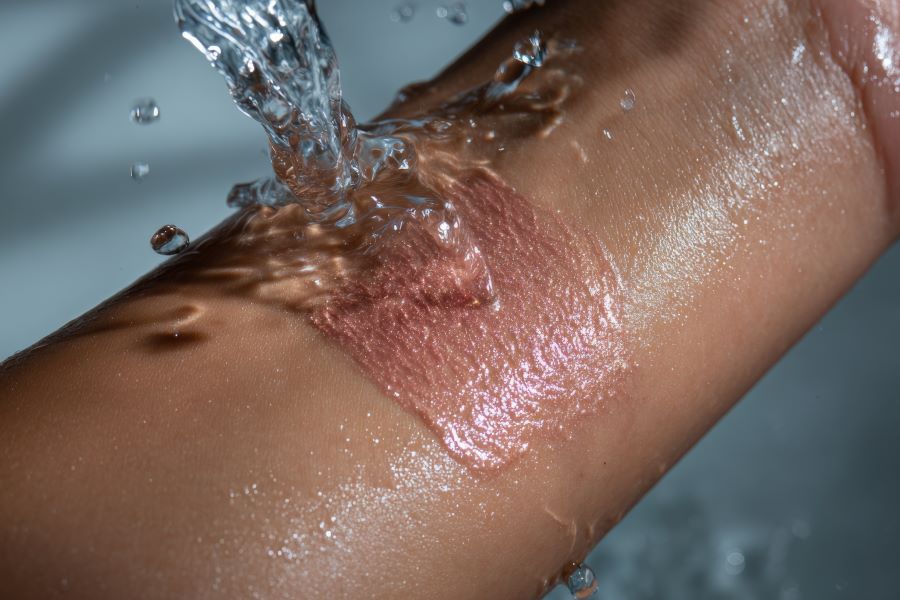
Human trials are conducted to ensure the safety and efficacy of products. Steep increase in testing
According to The Korea Times, the number of cosmetics products registered in the country increased from 1.2 million in 2020 to 1.38 million in 2024.
The publication states that the government prioritizes industry growth, over health concerns.
Earlier this year, South Korea became the second-largest global cosmetics exporter, surpassing the US and trailing behind France. According to the Korea International Trade Association, the country exported US$3.61 billion of beauty products from January to April, edging the US with US$3.57 billion.
Tech for testing
Integrating AI in business operations is increasingly implemented in the cosmetics industry, especially in K-beauty. Trendier AI previously told us how beauty companies can tenfold the time they spend on marketing research and production, innovate new ingredients, and speed up consumer feedback using the emerging technology.
Kei Chun, CEO and co-founder of the South Korea-based company, told us: “The K-beauty industry is all about speed and dynamism. [AI in the beauty industry] isn’t just about the future, but it’s already happening now. AI is being applied across the entire value chain.”
However, technology has also shown potential to replace unethical testing in cosmetics. A study published earlier this year demonstrated how human organ-on-a-chip technologies can potentially replace animal testing in cosmetics.
The researchers said that the technology can be used to evaluate personal care products for toxicity more ethically and with faster results than traditional cosmetics testing.