Do Blush Formats Differ by Market? | Japan Top 10: 9 Powders

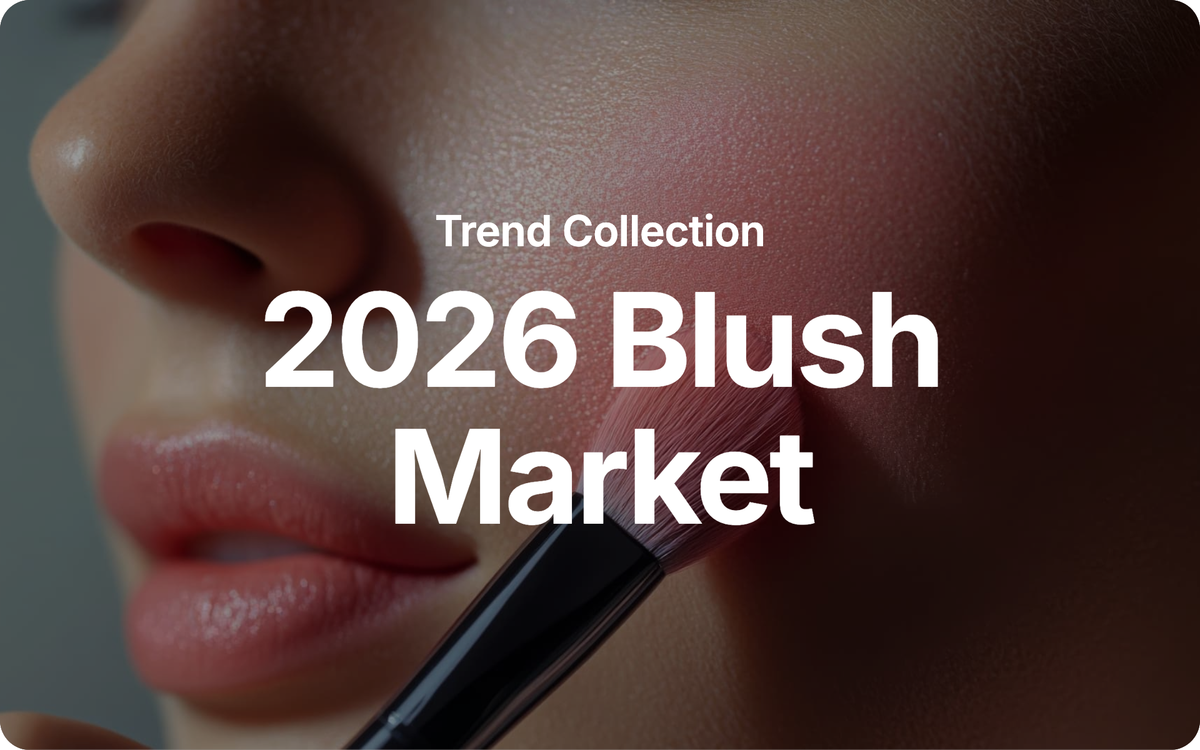
Trendier AI found a clear cross-market format split: 9 of @cosme Japan's review-ranked Top 10 were powders, while the US leading set leaned toward cream, balm and stick formats. The 2026 collection compares how format, finish and brand presence change across Korea, Japan and the US.
A blurred or soft-focus finish appears across all three markets, but the leading delivery systems diverge. For product teams, the question is whether the same blush concept should travel unchanged, adapt or split by market.
Which Blush Formats Lead in Japan, Korea and the US?
The clearest contrast appears between Japan and the US. At @cosme, 9 of the review-ranked Top 10 were powders. At Sephora US, the leading set shifts toward cream, balm and stick formats.
Korea sits closer to Japan on format, with powder-led products occupying more of the leading set. That creates a different starting point for concept validation than the US, where portable, spreadable and hybrid textures are more prominent.

How does the market signal change by country?
| Market | Top 10 format signal | Product-planning question |
|---|---|---|
| Japan | 9 of 10 are powders | Can the concept compete on powder payoff, ease of use and local price expectations? |
| US | Cream, balm and stick formats take a larger share of the leading set | Does the format spread and blend easily enough to compete with hybrid and stick products? |
| Korea | Powder-led format mix | How strongly should the product prioritize colour payoff, pigmentation and compatibility with base makeup? |
Source: Trendier AI, 2026 Blush Market cross-market synthesis.
Does a Shared Blur Finish Require the Same Format?
Across all three markets, the synthesis found a common product promise around a blurred finish. The difference is how that promise is delivered.
Korea and Japan concentrate more leading products in powder formats. In the US, the same soft-focus direction appears more often through cream-to-powder and other cream, balm or stick formats.
The useful question is not whether “blur” works globally. It is which delivery system makes that finish credible in each target market.

What Changes When a Korean Blush Brand Moves Overseas?
Format is only one part of market fit. Trendier AI's eight-storefront comparison found that Korean brands appeared in the blush brand Top 10 across multiple stores analyzed in Korea, Japan and the US.
That presence is not uniform across storefronts. For global sales and brand teams, a market-by-market competitor shortlist is more useful than assuming that a strong domestic position will transfer unchanged overseas.
What Should Product Planning, R&D and Global Sales Validate Next?
Meeting-ready deliverable: Build a one-page blush market-fit shortlist showing target market, preferred format, leading competitor set, finish language, price band and the concept decision for each market.
What Is Inside the 2026 Blush Market Collection?
Nine reports connect the cross-market synthesis with eight-storefront comparisons, K-blush overseas reach and market-specific market, ranking and keyword views. All nine reports are shown below, while the article itself keeps the focus on cross-market fit rather than one retailer.


Data and Scope
FAQ
Which blush format is strongest in Japan?
Powder is the clearest format signal in the analyzed @cosme Top 10, where 9 of 10 products were powders.
How is the US blush market different?
Sephora US shows a stronger mix of cream, balm and stick formats, creating a different starting point from Japan's powder-led ranking.
Is there a benefit shared across Korea, Japan and the US?
Yes. A blurred or soft-focus finish appears across all three markets, but the delivery format changes. Korea and Japan lean powder, while the US uses more cream-to-powder and stick-led formats.
What should a brand validate before taking one blush concept into another market?
Start with format-market fit. Compare the leading delivery systems, finish language, competitor positioning and price structure in the target market before deciding whether the original concept should travel unchanged.